Conference Info
- IndustryHuman Resources
- Unique IDUSC2026343
- Duration100 Minutes
- DateMar 13,2026 - May 29,2026
Description
Overview
With the IRS continuously updating rules around information reporting and tax compliance, staying current is more important than ever—especially when navigating the complexities of IRC Sections 1031 and 1035. These "like-kind" exchange provisions allow for significant tax deferral opportunities, but failing to follow the most recent requirements can lead to costly penalties and reporting missteps.
This focused and practical webinar offers critical updates and expert guidance to help tax professionals, advisors, and preparers remain compliant with the latest IRS rules regarding 1031 and 1035 exchanges. From understanding what qualifies under these sections to exploring the distinctions between reportable and taxable transactions, attendees will gain the knowledge needed to confidently handle like-kind exchanges while avoiding common pitfalls.
Your Benefits for Attending:
- Review recent updates and regulatory changes impacting 1031 like-kind exchanges
- Discover best practices and compliance strategies for managing 1031 and 1035 exchanges
- Understand taxable vs. reportable exchanges and how to avoid triggering IRS audits
- Learn how to properly defer gains on qualified property transactions
- Gain clarity on partial exchanges and how they are treated under IRS guidelines
- Identify key exceptions to reporting requirements for certain property sales
- Determine which properties and contracts are eligible under 1031 and 1035 rules
- Learn the time-sensitive requirements for 1031 exchanges to stay in compliance
- Understand when a 1035 exchange is appropriate and when alternative strategies may be necessary
This webinar is essential for tax professionals seeking practical tools and up-to-date knowledge to successfully manage like-kind exchanges while avoiding penalties and ensuring IRS compliance.
Who Should Attend:
Tax professionals, CPAs, financial advisors, preparers, and compliance officers involved in asset transfers, real estate, or insurance policy exchanges under Sections 1031 and 1035.
Table of Contents:
- Introduction
- Information Reporting Overview and What’s New
- The 1099-R – A Brief Overview
- Like-Kind Property
- Like-Kind Exchanges and IRC Code Section 1031
- Like-Kind Exchanges and IRC Code Section 1031 - Who Qualifies/Exchanges
- Like-Kind Exchanges and IRC Code Section 1031 - What Property Qualifies for a Like-Kind Exchange?
- Like-Kind Exchanges and IRC Code Section 1031 - Reporting Like-Kind Exchanges
- Like-Kind Exchanges and IRC Code Section 1031 - The Tax Cuts and Jobs Act
- Like-Kind Exchanges and IRC Code Section 1031 - Reminders
- IRC Code Section 1035 Exchanges
- IRC Code Section 1035 Exchanges - 1099-R Reporting Exceptions/Non-Resident Aliens
- IRC Code Section 1035 Exchanges - Annuities and 1035 Exchanges
- IRC Code Section 1035 Exchanges - Transfers and the 1035 Exchange
- Protect Yourself
- Attendee Questions
- Presentation Closing
Index:
- 1031 Exchanges
- 1035 Exchanges
- Asset
- Capital Gain
- Contract
- Deferred Exchange
- FIRE - File Information Returns Electronically
- Form 1042
- Form 1042-S
- Form 1099-DA
- Form 1099-R
- Form 8233
- Form 8824
- Form W-8
- Form W-9
- Inflation Reduction Act Of 2022
- Inflation Reduction Act Of 2022
- Intangible Property
- IRC Section 6109(a)(2)
- Like-Kind Exchange
- Nonresident Alien (NRA)
- Partial Exchange
- Partial Exchange
- Personal Property
- Real Property
- Reverse Exchange
- Safe harbor
- The Tax Cuts and Jobs Act
- TIN
- Transaction
- Transmitter Control Code (TCC)
- Unrelated Business Income (UBI)
- Vender
- W-8BEN
- W-8EXP
Key Terms:
1031 Exchanges: Under Section 1031 of the United States Internal Revenue Code, a taxpayer may defer recognition of capital gains and related federal income tax liability on the exchange of certain types of property, a process known as a 1031 exchange.
1035 Exchanges: A 1035 exchange is a provision in the tax code which allows you, as a policyholder, to transfer funds from a life insurance, endowment or annuity to a new policy, without having to pay taxes.
Asset: Property owned by a person or company, regarded as having value and available to meet debts, commitments or legacies.
Capital Gain: Capital gain is an economic concept defined as the profit earned on the sale of an asset that has increased in value over the holding period. An asset may include tangible property, a car, a business, or intangible property such as shares.
Contract: A written or spoken agreement, especially one concerning employment, sales, or tenancy, that is intended to be enforceable by law.
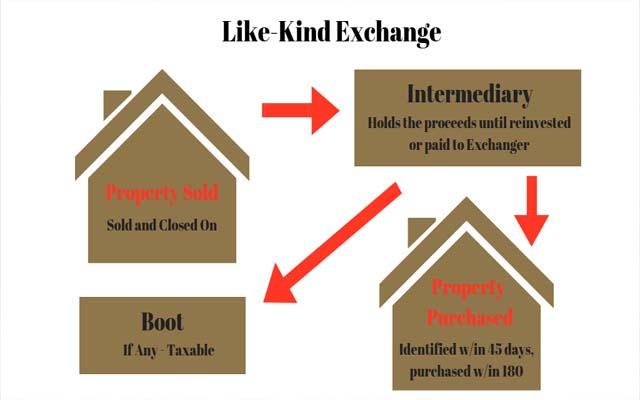
Deferred Exchange: The deferred 1031 exchange gives you time by allowing you to “sell” your first property to an intermediary, who then “buys” the property on the other end of the exchange at a later date. This keeps the entire series of actions as one transaction, which makes it eligible for a 1031 exchange, albeit a “deferred” one.
Form 1042: Form 1042, also "Annual Withholding Tax Return for U.S. Source Income of Foreign Persons", is used to report tax withheld on certain income of foreign persons.
Form 1042-S: Form 1042-S is used to report amounts paid to foreign persons (including persons presumed to be foreign) who are subject to income tax withholding. For an individual taxpayer, Form 1042-S is a document provided to you (and the IRS) by the payer of the income reported.
Form 1099-DA: This form is specifically designed to handle the reporting for cryptocurrency and digital assets.
Form 1099-R: Form 1099-R is a tax form from the Internal Revenue Service (IRS) for reporting distributions from annuities, profit-sharing plans, retirement plans, IRAs, insurance contracts, or pensions.
Form 1099-S: A Form 1099-S is a tax document used to ensure that the full amount received for a real estate sale of some kind is accurately reported. A 1099-S can also be used to report income made on a rental property or investment property. For selling real estate, the buyer must complete and file their own 1099-S.
Form 8233: IRS Form 8233 must be completed when a non U.S. citizen is claiming tax treaty exemption from income taxes for income received for services provided as an independent contractor.
Form 8824: Use Parts I, II, and III of Form 8824 to report each exchange of business or investment property for property of a like kind. Certain members of the executive branch of the Federal Government and judicial officers of the Federal Government use Part IV to elect to defer gain on conflict-of-interest sales.
Form W-8: Form W-8 is filled out by foreign entities (citizens and corporations) in order to claim exempt status from certain tax withholdings. The form is used to declare an entity's status as non-resident alien or foreign national who works outside of the United States.
IRC Section 6109(a)(2): Requires that a payee provide a TIN to the payer when the payment will be reportable on an information return.
Inflation Reduction Act Of 2022: The Inflation Reduction Act will protect Medicare recipients from catastrophic drug costs by phasing in a cap for out-of-pocket costs and establishing a$35 cap for a month's supply of insulin. And, as an historic win, Medicare will be able to negotiate prices for high-cost drugs for the first time ever.
Intangible Property: Intangible property, also known as incorporeal property, describes something which a person or corporation can have ownership of and can transfer ownership to another person or corporation, but has no physical substance, for example brand identity or knowledge/intellectual property. (en.wikipedia.org)
Like-Kind Exchange: A like-kind exchange under United States tax law, also known as a 1031 exchange, is a transaction or series of transactions that allows for the disposal of an asset and the acquisition of another replacement asset without generating a current tax liability from the sale of the first asset.
Limited Liability Company (LLC): An LLC is a corporate structure where members cannot be held accountable for the company’s debts or liabilities. This can shield business owners from losing their entire life savings if, for example, someone were to sue the company. Can be a single member (much like a sole proprietor) or a multi-member. It shares certain traits of both corporations as well as partnerships or sole proprietorships. It is not a corporation.
Nonresident Alien (NRA): This income is taxed at a flat 30% rate, unless a tax treaty specifies a lower rate. Nonresident aliens must file and pay any tax due using Form 1040NR, U.S. Nonresident Alien Income Tax Return or Form 1040NR-EZ, U.S. Income Tax Return for Certain Nonresident Aliens with No Dependents.
Partial Exchange: Clients may exchange a portion of an annuity contract for another annuity contract tax-free when certain requirements are met. The basis and income will be split pro rata between the two contracts, which creates a potential for abuse.
Personal Property: Personal property is something that you could pick up or move around. This includes such things as automobiles, trucks, money, stocks, bonds, furniture, clothing, bank accounts, money market funds, certificates of deposit, jewels, art, antiques, pensions, insurance, books, etc.
Real Property: Real property is land and any property attached directly to it, including any subset of land that has been improved through legal human actions. Examples of real properties can include buildings, ponds, canals, roads, and machinery, among other things
Reverse Exchange: The Reverse Exchange is the opposite of the Delayed Exchange. Where the Delayed Exchange requires the Exchangor to relinquish property before he acquires property, the Reverse Exchange allows the Exchangor to acquire property first and relinquish property second.
Safe Harbor: A safe harbor is a provision of a statute or a regulation that specifies that certain conduct will be deemed not to violate a given rule. It is usually found in connection with a vaguer, overall standard. Under the safe harbor, a “rental real estate enterprise” is treated as a trade or business for purposes of Sec. 199A if at least 250 hours of services are performed each tax year with respect to the enterprise. ... The safe harbor requires that separate books and records be maintained for the rental real estate enterprise.
TIN: A Taxpayer Identification Number is an identifying number used for tax purposes in the United States and in other countries under the Common Reporting Standard. In the United States, it is also known as a Tax Identification Number or Federal Taxpayer Identification Number.
Tax Cuts and Jobs Act: The Act to provide for reconciliation pursuant to titles II and V of the concurrent resolution on the budget for fiscal year 2018, Pub.L. 115–97, is a congressional revenue act of the United States originally introduced in Congress as the Tax Cuts and Jobs Act, that amended the Internal Revenue Code of 1986.
Transaction: In QuickBooks, a transaction type identifies what kind of transaction occurred, such as a customer transaction, bill payment or a bank transfer. When you submit a transaction, you type in a transaction code to represent it.
Transmitter Control Code (TCC): The Transmitter Control Code (TCC) is an identifier that the IRS uses to distinguish different electronic filing companies. It's necessary when you need to file for a correction. Getting a TCC depends on how you file your 1099 forms
Unrelated Business Income (UBI): For most organizations, unrelated business income is income from a trade or business, regularly carried on, that is not substantially related to the charitable, educational, or other purpose that is the basis of the organization's exemption
Vendor: A vendor is a person or business that supplies goods or services to a company. Another term for the vendor is the supplier. In many situations, a company presents the vendor with a purchase order stating the goods or services needed, the price, delivery date, and other terms.
W-8BEN: Form W8-BEN, Certificate of Foreign Status of Beneficial Owner for U.S. Tax Withholding, is used by a foreign person to establish both foreign status and beneficial ownership, and to claim income tax treaty benefits with respect to income other than compensation for personal services. Give Form W-8 BEN to the withholding agent or payer if you are a foreign person and you are the beneficial owner of an amount subject to withholding. Submit Form W-8 BEN when requested by the withholding agent or payer whether or not you are claiming a reduced rate of, or exemption from, withholding.
W-8EXP: A foreign government must provide Form W-8EXP to establish eligibility for exemption from withholding for payments exempt from tax under section 892 or for purposes of establishing its status as an exempt beneficial owner.
Steven Mercatante